What Is GEO? The Pathway to Visibility on ChatGPT
22 OCTOBER 2026
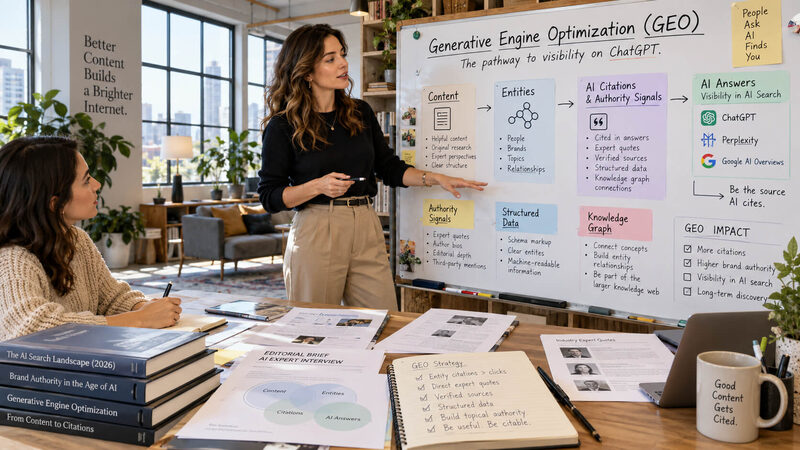
User search behavior is undergoing a fundamental shift; audiences are no longer just clicking through classic Google blue links but asking questions directly to generative AI models like ChatGPT, Perplexity, and Google AI Overviews. When a prospective customer asks for a recommendation within your sector, does artificial intelligence cite your brand as an authority? Generative Engine Optimization (GEO) the evolution of traditional Search Engine Optimization (SEO) designed for Large Language Models (LLMs) is the next-generation framework built to position your business at the core of these conversational answers.
What Is GEO and How Does It Differ from Traditional SEO?
The Shift from Organic Clicks to AI Citations
In traditional SEO, the primary benchmark of success is winning high SERP rankings to capture organic clicks directly to your landing pages.
Generative Engine Optimization (GEO) focuses on getting your brand referenced, directly quoted, and cited as an authoritative source within conversational summaries generated by AI assistants.
Keyword Density vs. Semantic Entity Networks
While legacy search algorithms prioritized keyword frequency across on-page copy, generative AI models evaluate semantic entity relationships, contextual depth, and knowledge graph credibility.
AI search engines bypass surface-level text in favor of deeply researched, verifiable, and structurally organized data layers.
5 Core GEO Pillars to Rank First in ChatGPT and AI Search
1. Provide Verifiable Statistics and Empirical Benchmarks
Academic research on Generative Engine Optimization shows that embedding factual, verifiable numerical data into content increases visibility within AI-generated responses by over 30%.
Replacing vague statements like "many companies face challenges" with sourced findings such as "according to a 2026 industry report, 42% of enterprises struggle" ensures LLMs evaluate your copy as a high-confidence factual reference.
2. Integrate Verifiable Expert Commentary and Direct Quotes
Generative search engines recognize attributed expert commentary (Quotation Addition) as a powerful indicator of topical authority.
Including perspectives from named specialists, researchers, or executive leaders makes it significantly easier for AI models to synthesize and quote your content directly.
3. Build Definitive Answer Engine Formats
Place concise, direct 2-3 sentence summary blocks directly under your primary headings to answer user queries immediately.
AI web crawlers actively extract structured, plain-spoken answers rather than wading through lengthy, conversational introductions.
4. Open Technical Server Architecture to AI Crawlers
Verify that your domain's robots.txt configuration explicitly permits AI search spiders such as OAI-SearchBot, GPTBot, and PerplexityBot.
Ensure key page text is delivered directly via server-side rendered HTML rather than hidden behind client-side JavaScript hydration routines that bots may fail to render.
5. Deploy Comprehensive Schema Markup and Semantic Knowledge Links
Implement structured JSON-LD schemas—including Organization, Article, FAQPage, and TechArticle—to establish unambiguous machine readability.
Contextually link technical terminology, company entities, and proprietary concepts to authoritative knowledge sources like Wikipedia or Wikidata to eliminate disambiguation errors for LLMs.
If you want your brand to be cited and recommended across ChatGPT, Perplexity, and Google AI Overviews, connect with the Reklam5 team today. Partner with our specialists to build your digital authority and execute a forward-thinking GEO strategy.
Copyright 2026 - Reklam5: Dijital Ajans · Powered by 