The Best AI Visibility Tools in 2026: A Practical Guide

5 NOVEMBER 2026
How do you know if AI engines mention your brand at all, even when your organic rankings look healthy? Buyers can encounter product comparisons, supplier recommendations, and brand descriptions inside an AI answer before visiting your website. A conventional ranking report doesn't tell you what those answers say.
The measurement gap matters. In a panel of U.S. adults, Pew Research Center found that users clicked a traditional search result on 8% of visits with an AI summary, compared with 15% without one. Ranking well and appearing in the answer are different outcomes.
An AI visibility tool tracks brand mentions, citations, sentiment, and share of voice across selected experiences such as ChatGPT, Gemini, Perplexity, and Google AI. Generic rank trackers don't automatically capture these answer-level details.
The best AI visibility tools deserve evaluation against practical criteria:
- Coverage: Relevant engines, markets, languages, and buyer prompts.
- Accuracy: Reproducible observations, inspectable answers, and correct brand identification.
- Integrations: Usable connections to analytics, SEO workflows, and implementation systems.
- Reporting: Clear distinctions between mentions, recommendations, citations, and commercial outcomes.
Don't confuse a vendor's coverage headline with what's included in your subscription. Tracked answers can also differ from what real users see because context, location, and collection methods vary. The choices below suit different team types and maturity levels, rather than pretending every organization needs the same dashboard.
Table of Contents
- 1. Outrank
- 2. Semrush AI Visibility Toolkit
- 3. Ahrefs Brand Radar
- 4. Profound
- 5. Peec AI
- 6. Otterly.AI
- 7. Scrunch
- 8. AthenaHQ
- 9. Writesonic
- 10. SE Visible
- 11. KeywordKick
- Best AI visibility tools at a glance
- Choosing a Tool and Turning Visibility Data into Action
1. Outrank
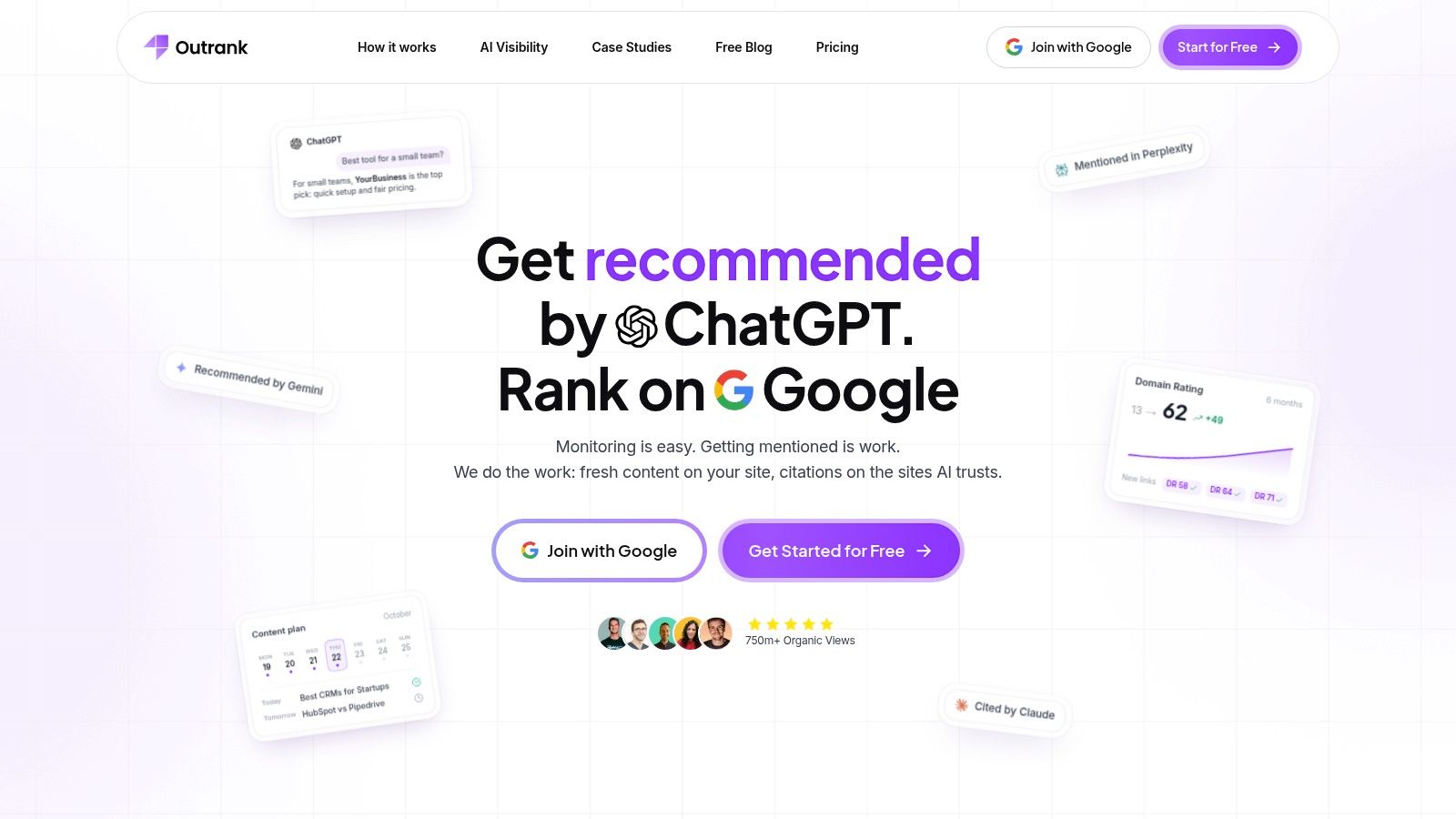
Outrank fits teams whose main bottleneck is producing and publishing useful content, not just collecting more visibility reports. Its broader offering combines AI-assisted keyword research, article creation, brand-voice customization, images, and publishing workflows.
Outrank's AI citation tools are worth evaluating alongside those production capabilities. The practical attraction is connecting citation opportunities with a content operation that can act on them, rather than maintaining a separate backlog nobody publishes.
That distinction matters for lean marketing departments. Say an ecommerce brand discovers that assistants answer material-care questions using competitors' guides. The next useful step is an accurate care resource, reviewed by someone who understands the products, not another screenshot of the missing citation.
Where Outrank fits the workflow
Outrank supports publishing to destinations including WordPress, Webflow, and Notion, alongside collaboration and API integration capabilities. These are useful execution integrations, but they aren't automatically evidence of analytics attribution or complete answer-engine monitoring.
- Coverage: Validate which citation experiences, prompts, and markets the chosen package measures. Don't infer monitoring breadth from its content capabilities.
- Accuracy: Review generated product claims, comparisons, and brand descriptions before publication. Content generation doesn't replace factual verification.
- Integrations: Assess publishing permissions, draft approval, and how updates reach existing pages.
- Reporting: Require a clear connection between a tracked opportunity, the published page, and subsequent citation observations.
Choose Outrank when content throughput is the constraint. A dedicated tracker may still be necessary if your priority is historical, multi-market answer monitoring or an auditable record of how assistants describe a regulated product. More publishing capacity won't solve weak prompt selection or missing measurement.
2. Semrush AI Visibility Toolkit
Semrush is a sensible first evaluation for teams already using its SEO research and audit workflows. The Semrush AI Visibility Toolkit brings prompt tracking, competitor research, AI visibility reporting, and AI-readiness auditing into a familiar environment.
Its listed coverage includes ChatGPT, Google AI, Gemini, and Perplexity, but the subscription's actual tracking allowance matters more than the platform-wide list. Separate research access from the custom prompts you can monitor repeatedly.
A useful measurement principle comes from the Semrush AI Visibility Index: fewer than one in five brands in its benchmark were both frequently mentioned and consistently cited as authoritative sources. A mention isn't the same as source authority.
Best for an existing SEO workflow
For coverage, model your required prompts by market, category, and buying stage before choosing a plan. Tight domain or prompt allowances can become restrictive when a brand operates localized websites.
For accuracy, inspect the underlying answers and cited pages rather than accepting an aggregate score. For integrations and reporting, test whether your team can connect findings to existing audits, content briefs, and stakeholder reports without manual reconstruction.
Our guide to GEO and ChatGPT visibility explains why these answer-level outcomes need their own measurement.
The trade-off: Familiarity reduces workflow friction, but it doesn't guarantee the best specialist monitoring depth. Existing subscribers should test the module, not assume it's already included or sufficient.
3. Ahrefs Brand Radar
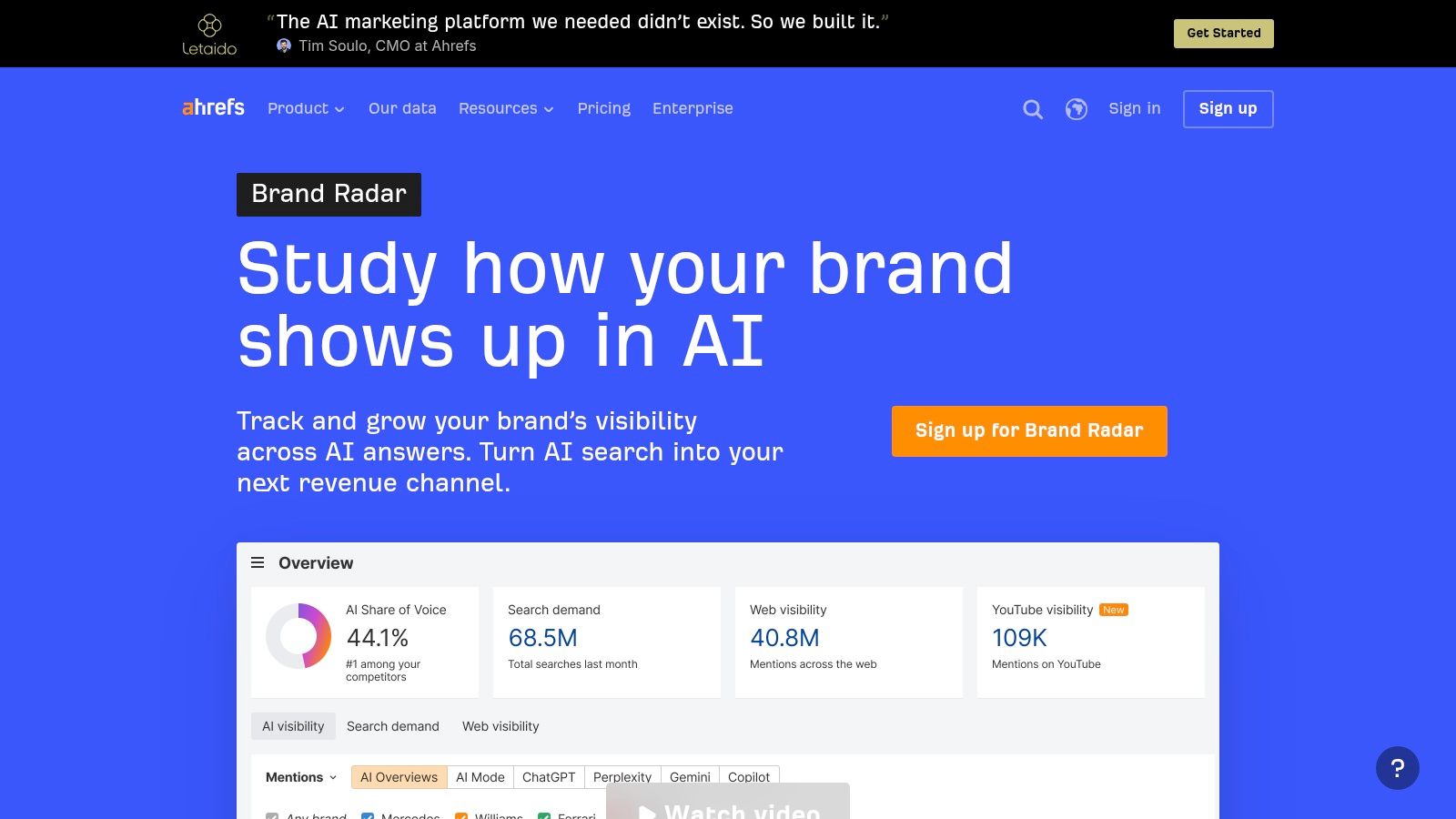
A broad discovery index and a controlled prompt portfolio answer different questions. Ahrefs Brand Radar is attractive because it combines search-derived AI-answer discovery with custom prompt tracking, helping SEO teams investigate a category before deciding what to monitor.
The broad index can reveal competitors, cited domains, and topics your team hadn't considered. Custom tracking is better suited to repeatedly checking the exact buyer questions that matter to your business.
Don't treat estimated impressions as observed assistant impressions. Likewise, an indexed answer isn't proof that your target customer encountered that answer.
A large answer database helps you discover opportunities. A representative prompt portfolio helps you measure progress.
For coverage, distinguish the engines and markets available in the pre-collected index from those supported by custom monitoring. Niche industrial products and low-demand brands may need deliberately written prompts because broad discovery won't necessarily represent their buying process.
For accuracy, open cited URLs and inspect whether the reference supports the brand claim. A domain-level citation can look encouraging while pointing to an irrelevant page.
For integrations, existing Ahrefs users gain a practical route from answer sources into backlink and content investigation. For reporting, keep indexed discovery, custom prompt results, and estimated exposure separate.
Choose Brand Radar for SEO-led competitive investigation. Check package boundaries carefully: index access and custom tracking aren't interchangeable, and the commercial fit depends on which combination your team needs.
4. Profound
Enterprise teams should evaluate Profound when they need an AI-search intelligence program, not just a mention alert. Its focus on answer analysis, competitive research, and brand representation makes it relevant to organizations with dedicated analytics and content stakeholders.
The strongest procurement test isn't a polished demonstration. Supply your own prompts, including ambiguous brand names, localized product questions, and comparisons where the brand shouldn't appear.
Measurement stability deserves particular attention. An AirOps analysis found that approximately 57% of brands that disappeared from a response later reappeared in another run, illustrating why an isolated answer can misclassify visibility.
Evaluate the evidence behind the score
For coverage, specify the engines, languages, and market configurations your enterprise needs. Broad product coverage doesn't mean every capability is available in the proposed package.
For accuracy, require timestamped answer evidence and a clear explanation of how repeated observations affect reporting. Separate factual errors from negative sentiment: an unfavorable but accurate comparison isn't misinformation.
For integrations, test exports, access permissions, and handoffs into your analytics and issue-management processes. Don't assume enterprise positioning guarantees compatibility with your reporting stack.
For reporting, request both executive summaries and prompt-level evidence. Regional teams need to understand what changed without reverse-engineering a global score.
The trade-off is organizational commitment. Profound makes more sense when someone owns interpretation and implementation. Without that ownership, deeper intelligence can become a larger reporting backlog rather than a better optimization program.
5. Peec AI
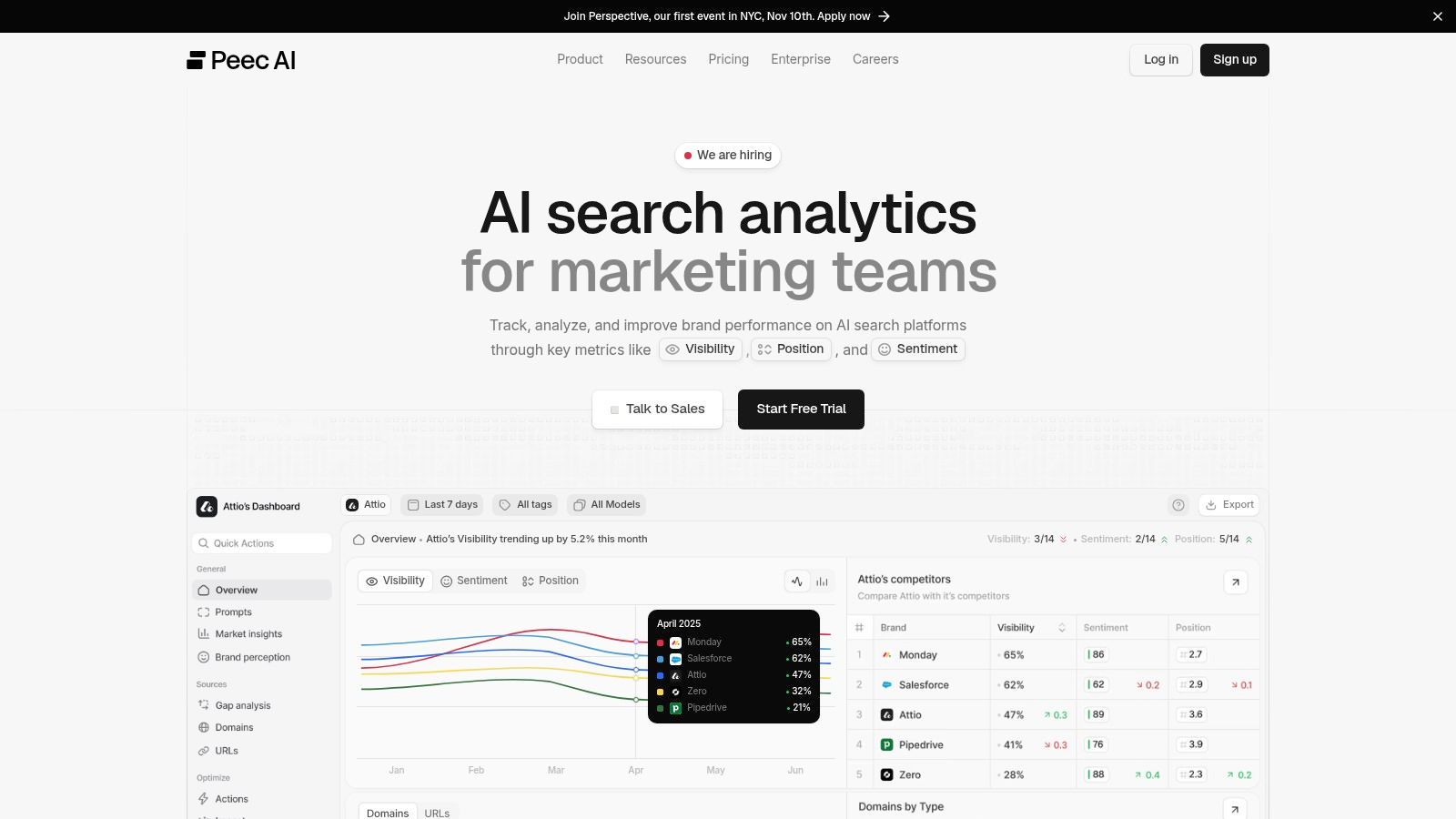
Peec AI fits marketing teams and agencies that want focused AI-search measurement. Its visibility, position, sentiment, competitor, and cited-source reporting is more relevant to this job than a content generator with a lightweight monitoring feature.
The practical benefit is a shared view of where a brand appears and which sources accompany those appearances. Listed multi-user access can also help content, SEO, and account teams work from the same observations, although workspace boundaries still need checking.
For an agency, usability isn't cosmetic. Analysts need to move from a client's missing recommendation to the relevant prompt and cited source without rebuilding the investigation elsewhere.
- Coverage: Confirm included engines and market settings on the selected plan. Additional model access can change the purchase economics.
- Accuracy: Compare recorded answers with controlled manual checks using matching prompts and locale settings.
- Integrations: Test exports and the reporting connections your team uses, not just whether an integration logo appears.
- Reporting: Keep competitor comparisons within the same prompt set, period, and engine configuration.
Peec is a good candidate when structured measurement is the priority. It won't remove the need for technical SEO, editorial judgment, or third-party authority work.
The main limitation is representativeness. A clean dashboard can still reflect a biased prompt portfolio, especially if the team tracks mostly branded questions. Include unbranded category and comparison prompts so you're measuring discovery rather than confirming that assistants recognize your company name.
6. Otterly.AI
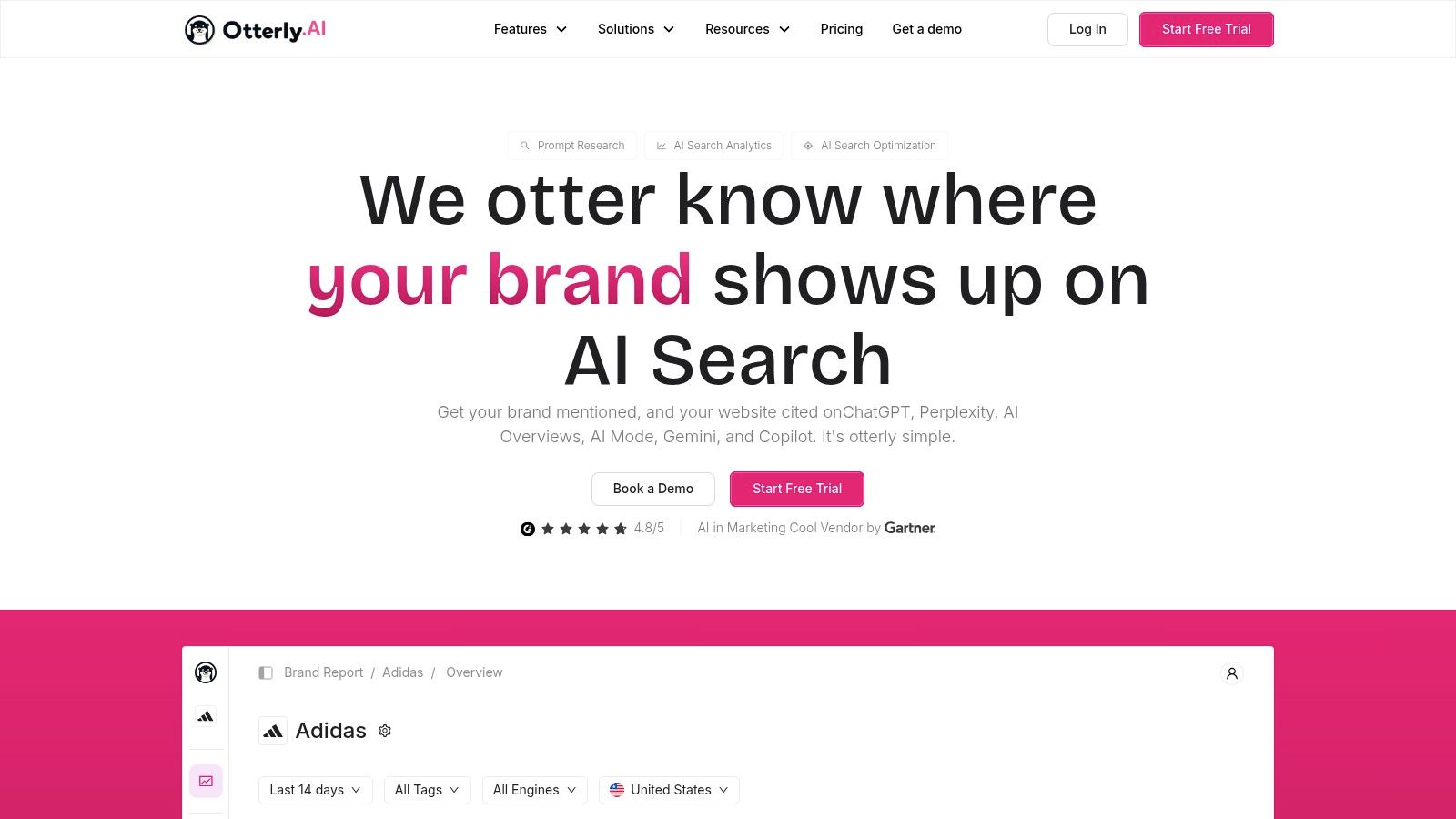
A small team doesn't need enterprise procurement to establish whether AI visibility deserves attention. Otterly.AI is a practical entry candidate for recurring prompt tracking, brand visibility, sentiment, citation monitoring, and optimization recommendations.
Its entry-level positioning suits a deliberately narrow pilot. Choose a priority product category or service line, then track buyer questions that your team can act on through existing pages and content.
Don't stretch a small prompt allowance across every product, country, and funnel stage. You'll end up with scattered observations that aren't useful for decisions.
Keep the pilot commercially relevant
For coverage, distinguish included search experiences from paid engine add-ons. Prompt limits can also force an upgrade before the team's geographic coverage is complete.
For accuracy, inspect answers involving product names, retailer availability, and service areas. A correct brand mention attached to the wrong product isn't a successful result.
For integrations and reporting, confirm that you can retain historical results and move findings into your normal reporting process. Recommendations don't implement the changes, so assign each accepted recommendation to a content or technical owner.
Pair the monitoring with Google AI Overviews CTR protection tactics rather than assuming better answer visibility will restore every lost organic click.
Choose Otterly.AI to test the channel with limited operational overhead. If your team only needs an occasional brand-accuracy check, scheduled manual reviews may be enough until the prompt portfolio or reporting burden grows.
7. Scrunch
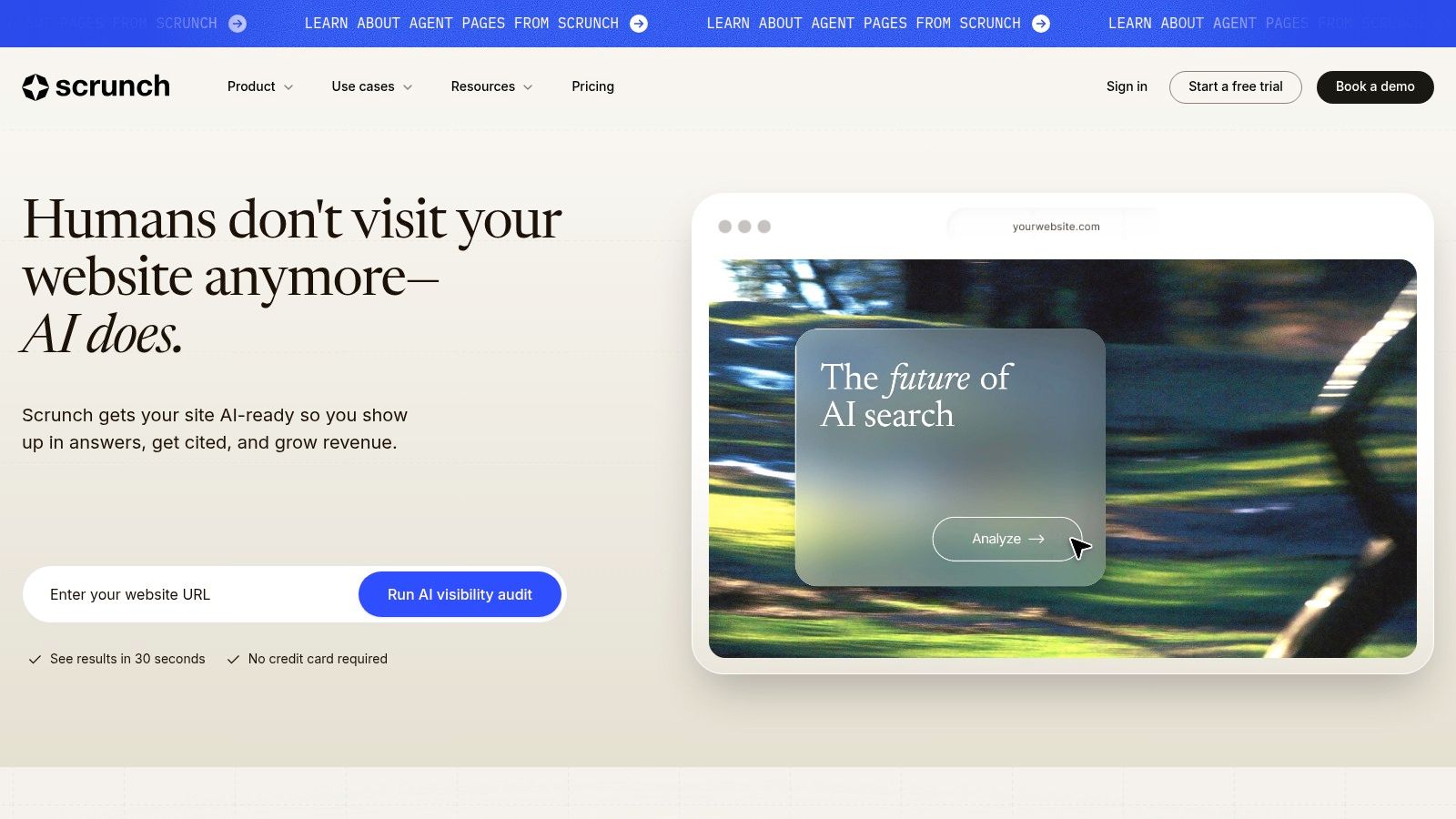
Scrunch addresses a different problem from a basic answer tracker: how AI agents access and experience your website. Its visibility analysis, agent-traffic capabilities, and Agent Experience Platform make it relevant to complex sites where delivery and access deserve technical investigation.
A large retailer might have accurate product information in its commerce system but expose incomplete content through client-side rendering or inconsistent templates. In that scenario, measuring mentions alone doesn't explain whether agents can retrieve the underlying information.
For coverage, evaluate answer-engine monitoring separately from agent-access analysis. They describe different activities and shouldn't be combined into an unexplained visibility score.
For accuracy, distinguish an observed crawler visit from evidence that an assistant used a page in an answer. Agent traffic isn't a citation, and neither automatically represents a buyer visit.
Implementation safeguard: Any agent-oriented delivery change should preserve factual consistency with the customer-facing site and pass technical review.
For integrations, include engineering early. Assess content parity, caching, deployment ownership, and rollback procedures before introducing another delivery layer.
For reporting, require separate views for access issues, answer visibility, and human referral activity. Our structured data and AI search guide provides useful context for making product and organizational information explicit.
Scrunch is worth the added evaluation effort when agent access is a real business concern. It's likely more involved than necessary for a small, technically straightforward site that only needs recurring mention and citation monitoring.
8. AthenaHQ
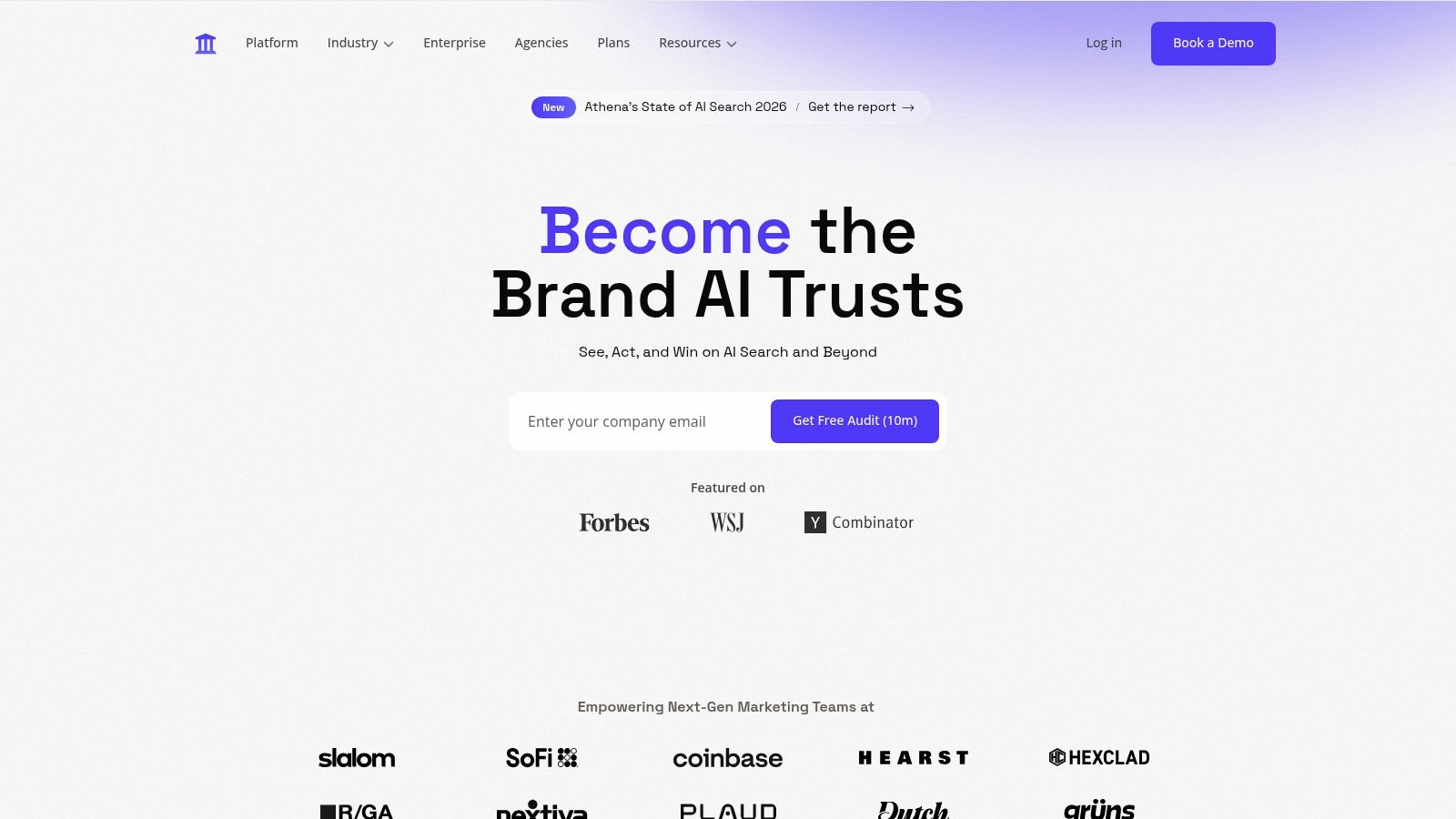
AthenaHQ is a candidate for mid-market teams seeking cross-platform visibility reporting with optimization guidance. Its listed Google Analytics and Google Search Console integrations make it particularly relevant when marketers want to investigate site performance alongside answer visibility.
The integration question is what the connection does. Importing traffic metrics into the same screen is useful, but it doesn't prove which assistant answer caused a sale or qualified lead.
For coverage, build a required engine-and-market list before testing the product. Broader coverage only helps if the included prompts resemble the questions your buyers ask.
Test the workflow, not just the dashboard
A useful evaluation starts with a real issue, such as a competitor repeatedly appearing for a priority solution category. Follow that issue from prompt evidence through the recommended action and into the team's reporting workflow.
- Accuracy: Check whether the system correctly distinguishes your brand, similarly named businesses, and localized product variants.
- Integrations: Verify available analytics dimensions, export permissions, and whether API access belongs to the selected package.
- Reporting: Look for engine-level trends and source evidence rather than a blended score alone.
AthenaHQ's described free entry option can help with exploration, but don't assume it supports an ongoing monitoring program. Usage allowances, additional credits, and access to advanced capabilities need to fit the intended workload.
Choose it when recommendations and analytics context matter together. Keep attribution claims conservative, and have an SEO practitioner review proposed actions before turning them into production changes.
9. Writesonic
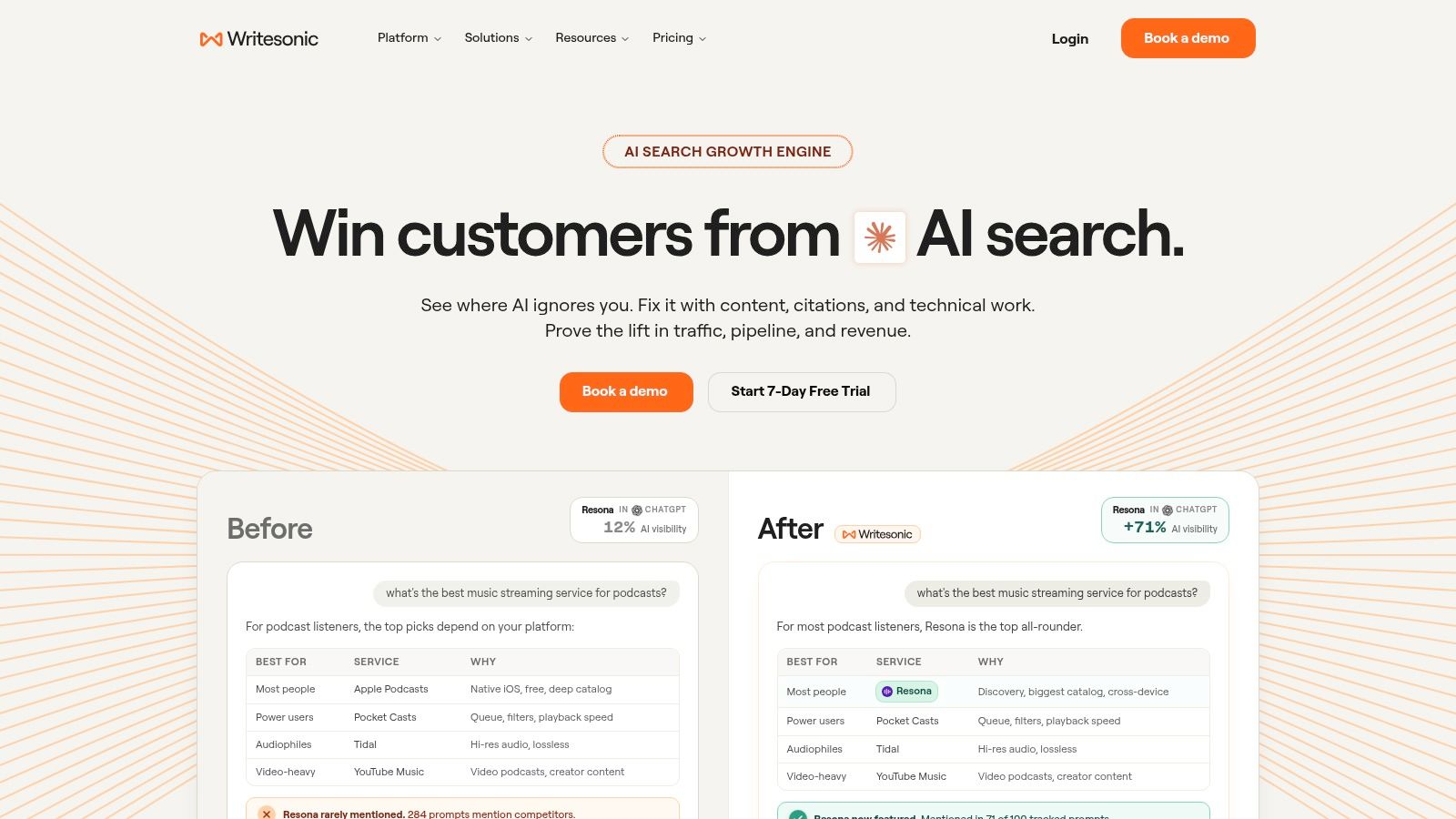
Writesonic suits teams that want visibility findings to feed content production and optimization. It combines brand and citation monitoring with competitor analysis and content-related workflows, although availability depends on the selected plan.
The appeal is fewer handoffs. A content marketer can investigate an answer gap, develop a brief, and work on the page without moving through unrelated systems.
The risk is treating every visibility gap as a request for another article. Sometimes the right fix is an inaccurate product specification, an inaccessible category page, or missing third-party evidence.
Prefer the smallest useful correction
For coverage, confirm the engines and monitoring features included in the actual subscription. Access to an AI writing product doesn't necessarily include its visibility capabilities.
For accuracy, review both sides of the workflow: whether the tracker interpreted the answer correctly and whether the generated draft states defensible facts. Publishing an unsupported comparison can create a brand problem rather than solve a visibility problem.
For integrations, evaluate approvals, CMS handoffs, and revision control. For reporting, retain the original prompt evidence and note the specific page change so later observations have context.
Writesonic is most useful when content execution is already part of the team's remit. It isn't a substitute for technical diagnosis or authority development.
If a monitoring result leads directly to bulk article generation, pause. First identify the source and information gap, then decide whether to revise an existing page, create something missing, or pursue relevant external coverage.
10. SE Visible
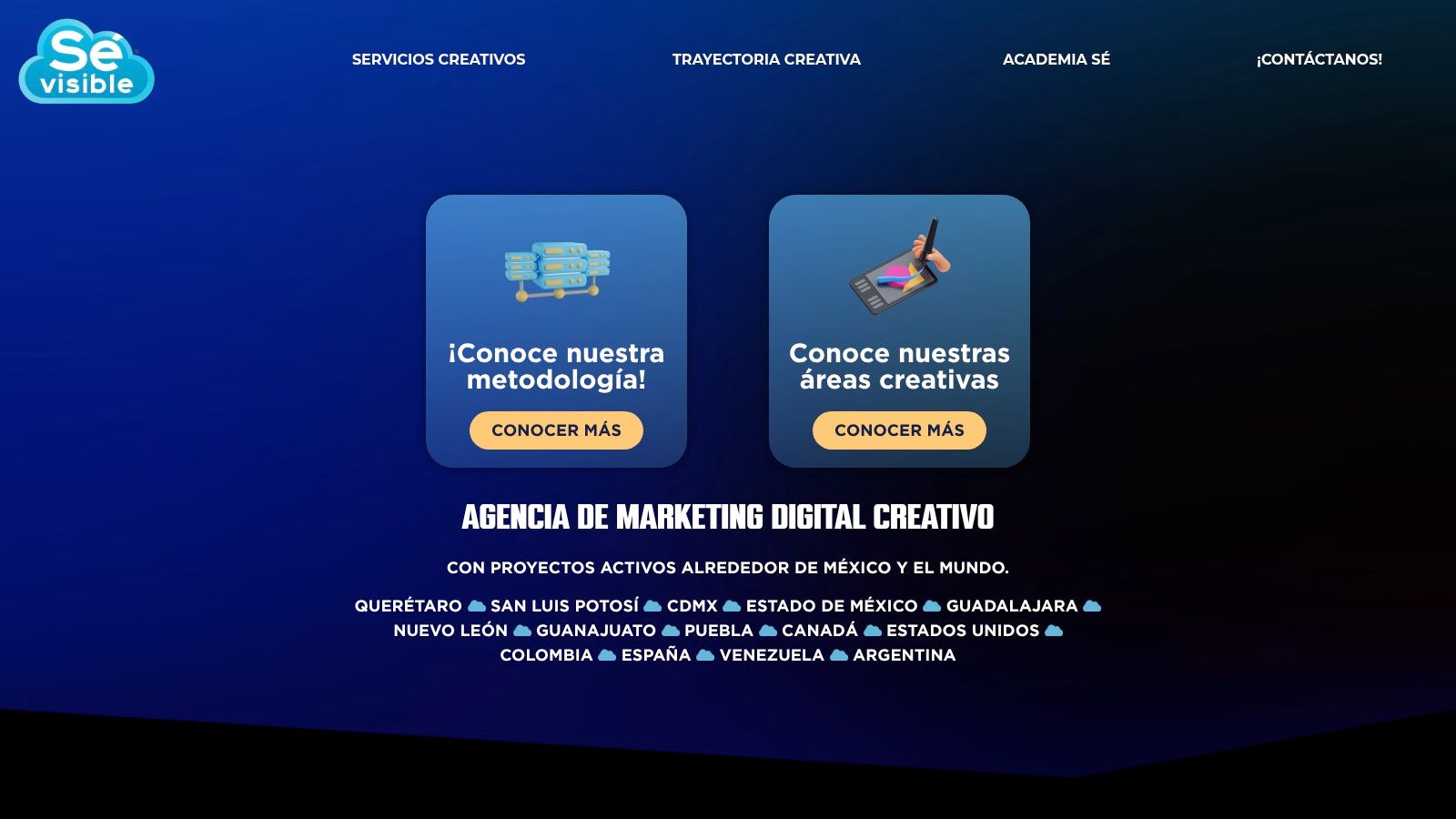
SE Visible is a dedicated AI visibility option associated with SE Ranking, making it a natural candidate for agencies already familiar with that ecosystem. Its focus includes mentions, citations, sentiment, competitor benchmarking, and cited domains and URLs.
Keep the standalone product distinct from broader SEO-suite functionality. A dedicated AI tracker doesn't automatically include the rank tracking, audit, or backlink capabilities your existing SEO process requires.
For an agency, the deciding factor may be whether analysts can produce consistent client reporting without extensive manual cleanup. Evaluate that with a real project rather than a demonstration account.
- Coverage: Confirm current engine support and location-aware tracking for the markets you serve.
- Accuracy: Inspect how the product handles absent AI answers, ambiguous mentions, and citations that don't support the surrounding claim.
- Integrations: Test reporting exports and project-level data access using the subscription under consideration.
- Reporting: Compare brands against a stable competitor set and preserve prompt-level context behind summary metrics.
SE Visible fits teams that want a focused tracker rather than a content-production platform. Its cited-page detail can help an SEO analyst investigate why a competitor or publisher appears in an answer.
Don't buy solely because a third-party comparison describes a particular engine or integration. Product packaging changes, and the relevant question is whether the current package supports your required workflow. A trial should end with a usable client report and an actionable task, not just a populated dashboard.
11. KeywordKick
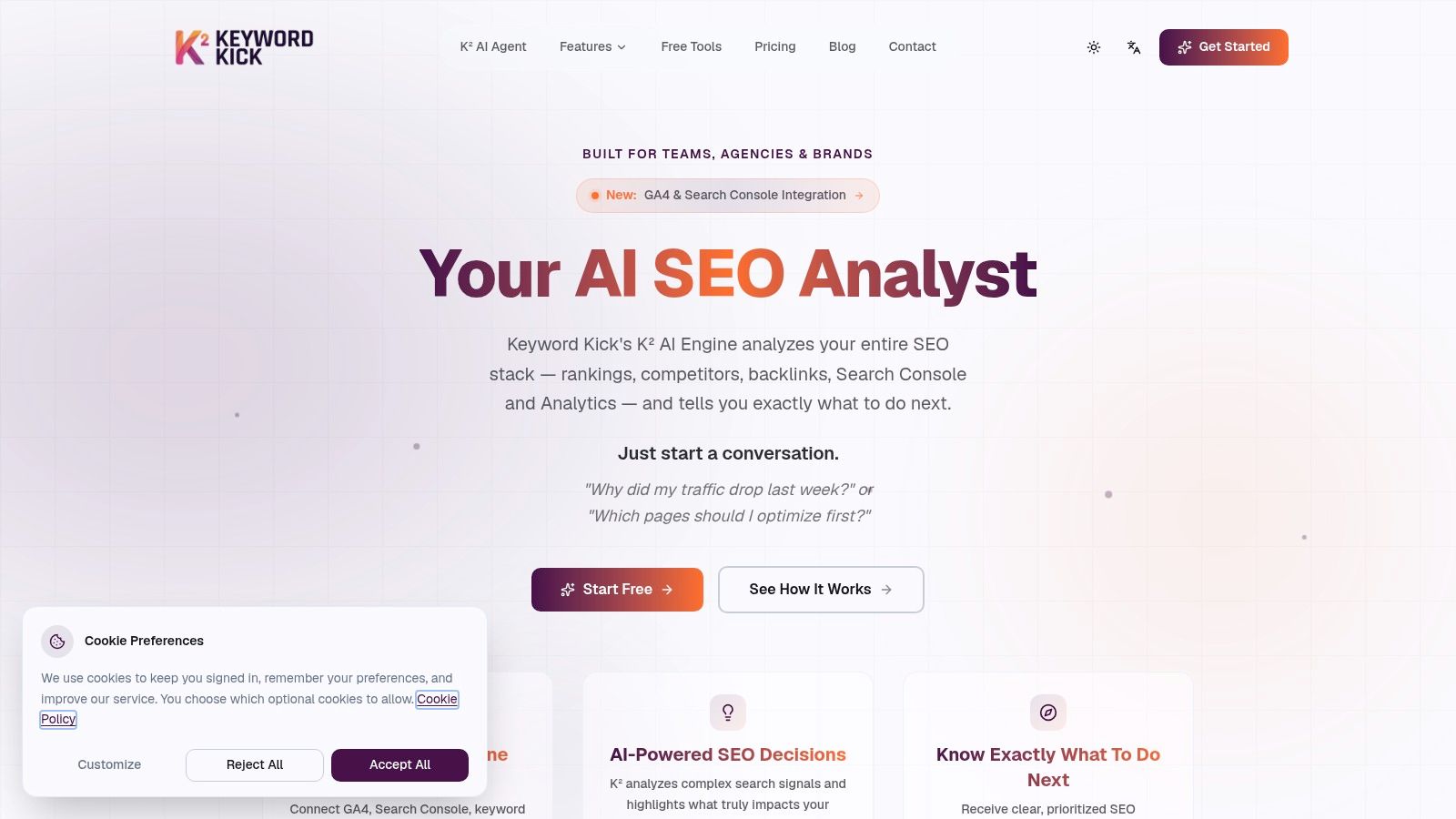
KeywordKick is an AI-first SEO platform developed by Reklam5. It focuses on turning dashboards into decision mechanisms, so teams can use search data to set priorities and organize SEO work.
That makes it distinct from a dedicated AI-answer tracker. KeywordKick's stated role is broader SEO analysis and prioritization, not reporting how often a brand appears in AI-generated answers. For coverage, assess whether it addresses the SEO signals and properties your team needs; verify citation-level monitoring separately.
For accuracy, examine how recommendations relate to the underlying search data before assigning work. A suggested priority can guide investigation, but it does not replace checking the evidence or confirming that an action was implemented.
Choose KeywordKick when fragmented SEO information is slowing decisions. For integrations, focus on how the platform supports the team's use of search data. For reporting, look for a clear priority order: what needs attention, why it matters, and how the team will assess the result.
A specialist visibility tracker may still be needed for scheduled assistant testing, saved answer records, or citation-level competitor reporting. Pairing tools makes sense when those requirements matter, but a dedicated tracker can be overkill if the team's immediate need is organizing SEO priorities. Keep the distinction clear: one tool helps structure SEO work, while a visibility tracker measures appearances in AI answers.
Best AI visibility tools at a glance
Compare tools on four practical criteria: coverage, accuracy, integrations, and reporting. Coverage should match the AI platforms and markets you need to monitor. Check how results are collected and whether you can review the underlying answers. Confirm that the tool connects to your existing workflows, then assess whether its reports help your team decide what to change. A dedicated tracker may be overkill if you only need broader SEO analysis.
| Best for | Platform coverage | Setup complexity | Entry option |
|---|---|---|---|
| AI-powered SEO content creation and publishing | Publishes to WordPress, Webflow, and Notion | Low; automated creation and publishing | Plans for content creation and publishing |
| Semrush users adding AI visibility reporting to SEO workflows | ChatGPT, Google AI, Gemini, and Perplexity | Moderate; configure prompts and domain | AI Visibility Toolkit |
| Ahrefs users connecting AI mentions with search data | Brand Radar's prompt index and supported AI platforms, with coverage dependent on feature | Moderate; choose an index or prompt-tracking package | Brand Radar packages |
| Larger teams needing deeper AI-search analysis | AI platforms selected for analysis | High; enterprise-oriented evaluation | Pricing and plan details may require sales contact |
| Marketing teams and agencies needing structured AI visibility reports | Multiple AI platforms; included models vary by plan | Moderate; configure prompts and reporting | Brand plans |
| Smaller teams starting recurring AI-search monitoring | Multiple AI search experiences; some engines are add-ons | Low; configure prompts and selected engines | Lite plan |
| Complex websites assessing both AI visibility and agent access | AI visibility monitoring and agent-oriented site delivery | High; specialized implementation may be needed | Free trial |
| Mid-market teams seeking AI visibility tracking and recommendations | Multiple AI platforms; coverage varies by plan | Moderate; review usage limits and integrations | Free entry option |
| Teams combining AI visibility monitoring with content workflows | AI search coverage varies by plan | Moderate; select a plan for required features | Trial |
| SE Ranking users and agencies needing prompt-level visibility reporting | AI engines and location coverage should be confirmed before purchase | Moderate; configure prompts and reporting | SE Ranking plans |
| SEO teams needing broad search-workflow analysis, not specialist AI-answer tracking | Google Search Console and Google Analytics 4 integrations; this is not a dedicated AI-answer coverage option | Moderate; connect data sources and review recommendations | Free plan |
Treat plan names as a starting point, not a complete comparison. Before committing, confirm which engines, prompt limits, locations, historical data, and integrations are included in the specific plan. Then compare answer-level evidence and reporting against the decisions your team needs to make. For teams that only need SEO analysis and recommendations, a separate AI visibility tracker may not be worth the added setup and cost.
Choosing a Tool and Turning Visibility Data into Action
The best AI visibility tools are the ones your team can use to make and verify decisions. Start with the business problem, then choose the smallest monitoring setup that produces reliable evidence.
Small teams should consider an affordable monitoring configuration from Otterly.AI or Peec AI, with included engines and prompt allowances checked carefully. Existing Semrush or Ahrefs users should test the relevant modules before introducing another vendor, while confirming that access isn't an additional purchase.
Enterprise teams should evaluate Profound for deeper answer intelligence and Scrunch when agent access and site delivery also matter. Content-constrained teams can assess Outrank or Writesonic, while keeping content production distinct from measurement quality.
Monitoring alone changes nothing. Every important finding needs an owner, an action, and a way to assess what happened afterward.
Run a measure, analyze, optimize, report cycle
Measure a stable portfolio of commercially relevant prompts, segmented by market, language, category, and buying stage. Keep answer evidence, timestamps, citations, and collection settings so analysts can distinguish a meaningful change from inconsistent observations.
Analyze why the brand is absent or misrepresented. Separate technical access problems, missing information, weak external authority, and factual inaccuracies instead of routing every issue to the content team.
Optimize the smallest relevant part of the system. Update product facts, improve extractable explanations, correct technical barriers, or pursue appropriate third-party coverage, with a named owner for each task.
Report visibility alongside qualified traffic, leads, and revenue, without claiming that every citation caused a conversion. Similarweb reported that AI platforms generated more than 1.1 billion referral visits in June 2025, but that aggregate scale doesn't establish the value of any individual brand's AI presence.
A dedicated tracker is overkill when nobody can maintain the prompt portfolio or implement the findings. Start with documented manual checks if your needs are narrow, then invest when recurring monitoring and reporting justify it.
Teams without in-house capacity can fold this work into an agency-led SEO program. Operating since 2007 from Istanbul and New York, Reklam5 combines technical SEO, content, authority building, and performance measurement with its own CIQRA platforms and AI-first KeywordKick platform.
Bring your priority markets, product categories, competitors, and current SEO reports to Reklam5. We'll help define a practical visibility baseline, separate measurement needs from implementation needs, and connect the findings to a prioritized SEO and performance roadmap with clear ownership and monthly reporting.
Copyright 2026 - Reklam5: Dijital Ajans · Powered by 